How to Check Website Authenticity Before Login: A Beginner’s Guide
Before entering login details on any website, users should take a moment to check whether the website address is genuine and whether the connection appears secure. Fake websites can imitate familiar designs to collect passwords, personal information or verification codes. Learning a few basic checks can help users recognise warning signs before accessing an account.
This guide explains how to review website authenticity, protect account details and browse more carefully. It provides general security guidance and does not confirm the current security status of any particular website.
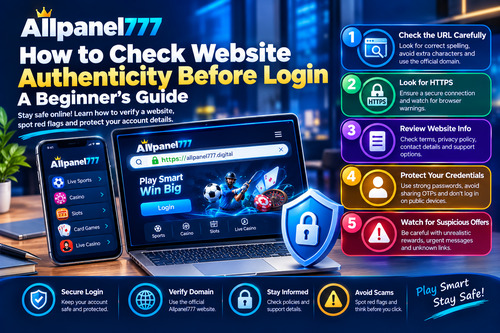
Check the Website URL Carefully
Start by examining the complete website address in your browser. Look for misspellings, extra words, unusual characters or a domain extension that differs from the address you intended to visit. Fraudulent websites sometimes use addresses that look similar to genuine domains.
When researching allpanel, type the known website address yourself or use a trusted bookmark rather than following an unexpected message or advertisement. Check the spelling again before entering any login information.
Look for HTTPS and Browser Warnings
A website using HTTPS encrypts information transferred between your browser and the website. However, HTTPS alone does not prove that a website is legitimate. Fake websites can also use encrypted connections.
Pay attention to browser warnings about invalid certificates, deceptive pages or unsafe connections. Never ignore these warnings just to access an account. If a warning appears, leave the page and verify the address independently.
Review the Website’s Basic Information
Look for accessible contact details, privacy information, terms and conditions, and account support procedures. Check whether these pages explain how personal information is handled and how users can report problems.
When checking allpanel exch information, distinguish between general descriptions and independently verified facts. A professional design, logos or positive claims do not automatically establish authenticity. Be cautious if important policies are missing, copied, contradictory or difficult to understand.
Protect Your Login Credentials
Use a strong, unique password for every account. Never share passwords or one-time passwords (OTPs), and do not enter sensitive details after clicking an unexpected login link. Avoid saving credentials on shared or public devices.
If a website requests unnecessary personal information or asks you to install an unfamiliar application, stop and verify the request through a trusted channel. Do not download files simply because a page claims they are required to log in.
Watch for Suspicious Offers and Messages
Urgent messages, unrealistic rewards, threats of account closure and pressure to act immediately can be warning signs. Scammers may use these tactics to make users click links without checking them.
Readers searching for allpanel 777 should independently verify the exact domain before proceeding. Do not rely solely on social media posts, forwarded messages or third-party recommendations.
Conclusion
Checking a website’s URL, reviewing browser warnings, reading its policies and protecting login credentials are useful steps before signing in. No single indicator guarantees that a website is trustworthy. Verify the address through reliable sources, avoid suspicious links and never share confidential login information. If anything seems unusual, do not log in until you have independently confirmed the website’s authenticity.